
We regularly encounter business owners and facility managers making fire safety decisions based on information that simply isn’t accurate. Some of it is outdated. Some of it has been broadly misunderstood for so long that it’s taken on a life of its own. And some of it sounds reasonable enough on the surface—until you look at what the data actually says.
To help set the record straight, we spoke with Frank Doolittle, Fire Sprinkler Manager for Summit Fire Protection’s St. Paul, Minnesota branch and a 21-year veteran of the industry. His firsthand experience—from system design to inspection and real-world fire events—helps separate fact from fiction.
Myth #1: “If one sprinkler goes off, they all go off and everything gets destroyed.”
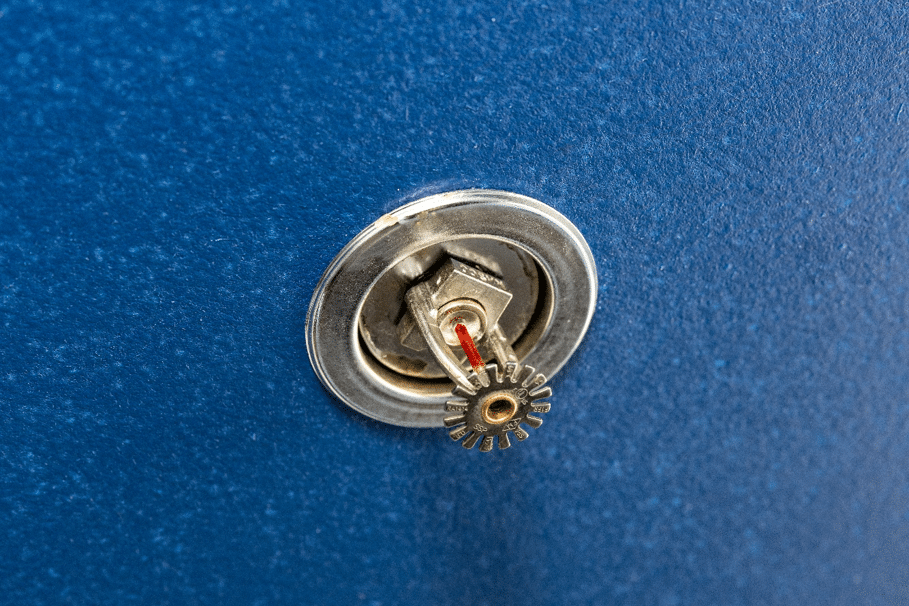
This is one of the most persistent myths—and it largely comes from movies.
In reality, sprinklers typically operate independently. In standard systems, each head activates on its own when it is subjected to significant heat, typically between 135–165°F. According to NFPA, in 85% of fires where sprinklers activated, only one sprinkler operated.
The sprinkler closest to the fire activates, while the rest stay dormant. Water is applied directly where it’s needed, and nowhere else.
“They’re heat activated and activate individually,” says Doolittle. “Only that one sprinkler is going to go off, not all of them.”
Myth #2: “Water damage from sprinklers is just as bad as fire damage.”
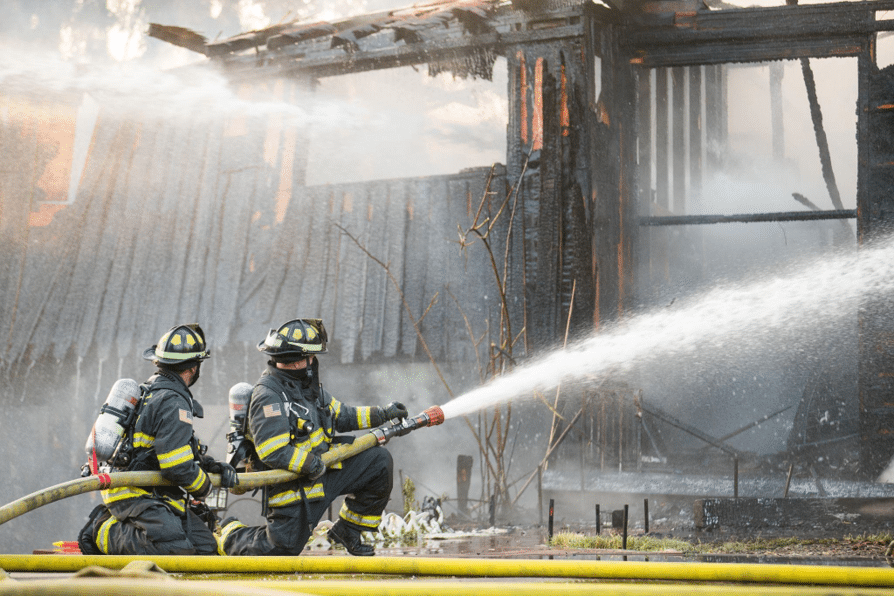
This one is wrong on several levels. First, an uncontrolled fire can completely destroy a building and potentially kill anyone trapped inside. Water can damage property, but not as badly as fire will, and it doesn’t harm occupants.
On top of that, fires that aren’t contained by sprinklers will take even more water from the fire department to extinguish. And, according to the NFPA, sprinklers use just a tiny fraction of the water that fire hose lines deliver. If you have sprinklers and they contain the fire in one room, you’re likely to see far less damage than if the fire spreads to other parts of the building and a sustained effort from fire fighters is required to put it out.
As we just shared in the previous myth, only the sprinkler heads that have been activated by heat will go off. In most cases that’s just one or two heads, meaning most of the water damage will be limited. “You’re not flooding the whole building,” says Doolittle. “You’re just having water confined to one room in most instances.”
Myth #3: “Sprinklers leak and are set off accidentally all the time.”
They don’t. Accidental activation is rare.
Sprinklers are heat-activated, they’re not triggered by smoke or steam. They require a sustained, significant rise in temperature to operate. “You’d have to basically hold a flame up to a sprinkler head to get it to operate,” says Doolittle.
When accidental activations do occur, they’re usually caused by physical damage (for example, someone hitting or hanging objects from a sprinkler head) or by poorly maintained systems—not spontaneous failure.
Like any building system, proper installation and routine inspections are key to reliable performance.
Myth #4: “Modern buildings are safer, so sprinklers aren’t as necessary.”
Newer doesn’t automatically mean safer.
Modern furnishings are often made from synthetic materials that burn faster and produce more toxic smoke than older materials. Lightweight construction components such as engineered lumber and composites can fail structurally sooner in a fire than traditional framing.
Add in the growing presence of lithium-ion batteries—found in everything from forklifts to backup systems—and today’s fire environments can develop faster and burn hotter than in the past. The NFSA notes that modern fires can become deadly in as little as two minutes.
The Bottom Line
We can walk through all the myths and cite the data on water usage and construction materials, but at the end of the day, one statistic tells the whole story: the risk of dying in a reported fire is 89% lower in buildings equipped with sprinklers, according to the NFPA.
The difference between a building with a sprinkler system and one without is not only measured in property damage, but whether everyone gets out in time.
“[Sprinklers] do save lives. They do save property… they’re an important component of any building,” says Doolittle. “If people are willing to build it, they should be willing to protect it with a sprinkler system.”
The ultimate goal of any fire protection strategy is to ensure every person gets home safely. Don’t wait until it’s too late to evaluate your facility’s level of protection. Take the first step toward comprehensive fire safety—contact Summit Fire Protection today.