
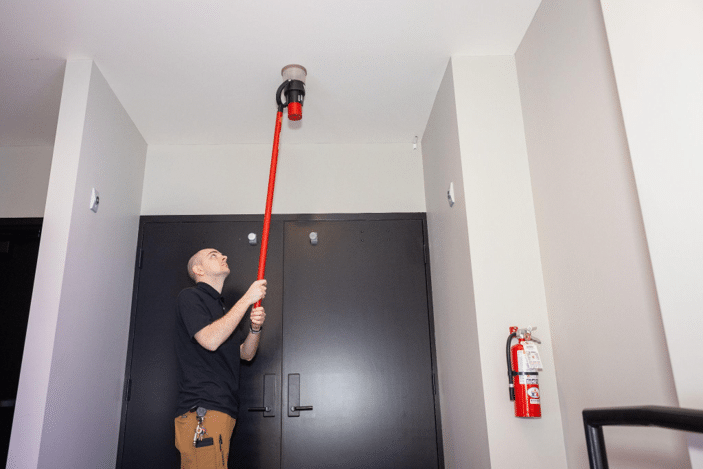
For most people, fire safety systems blend in with the background, something to be ignored until there’s an emergency. But for building owners and tenants alike, understanding how these systems work is more than just an exercise in curiosity. It’s what ensures they’re actually ready when you need them.
Here’s what building owners and tenants should know about the fire safety systems that protect their spaces.
The fire safety systems found in most buildings
The specific systems in any given building depend on its size, use, and local code requirements. That said, most retail and residential buildings contain some combination of three core systems: fire alarms, fire extinguishers, and sprinklers.
Fire alarm systems
Fire alarm systems alert everyone in a building that there’s a fire so they can evacuate. In most commercial and multifamily residential buildings, the alarm system is also connected to a third-party monitoring service, which contacts emergency services when an alarm trips. They’re triggered in one of three ways:
- Automatically by smoke detectors
- Automatically when a sprinkler activates and a flow switch sends a signal to the alarm panel
- Manually when someone pulls a pull station (the red-handled boxes typically located near exits and stairwells)
Portable fire extinguishers
Portable fire extinguishers are hand-held devices designed to control small, localized fires before they spread. They come in different types for different classes of fire: a standard ABC extinguisher handles most common fires, while a Class K extinguisher is rated specifically for commercial cooking environments. It’s important to know which type you have, and what it’s rated for.
Automatic fire sprinkler systems
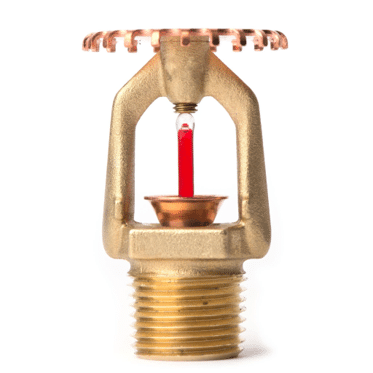
Fire sprinklers are activated by heat, and are designed to suppress a fire long enough for occupants to evacuate and the fire department to arrive. Each sprinkler head contains a small glass bulb filled with liquid. When heat from a fire causes that liquid to expand and shatter the bulb, water is released through that head. It’s important to know that heads trigger independently, meaning only the head or heads nearest to the fire will operate.
Wet systems, which keep water in the pipes at all times, are the most common type. Dry systems, which only fill with water after a head activates, are typically found in unheated spaces like attics, parking structures, and loading docks where standing water in the pipes would freeze.
What building owners need to know
Understanding what systems are in your building is the starting point. As an owner, the next responsibility is making sure they work.
Inspection and maintenance are the owner’s responsibility
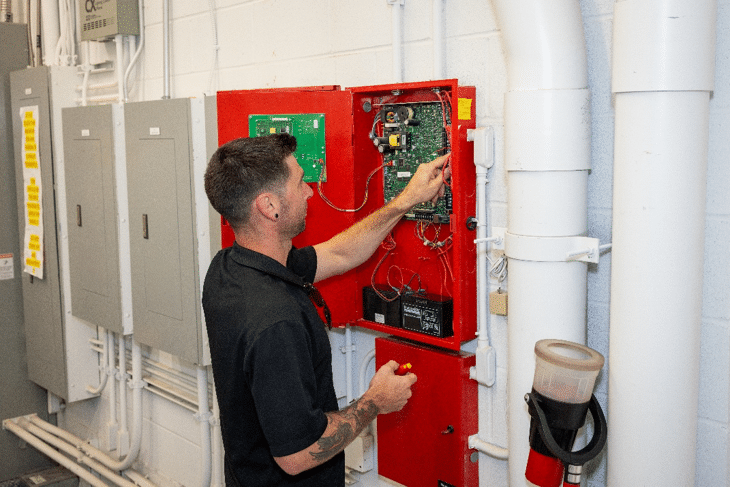
Building owners are ultimately accountable for keeping their fire protection systems in working order. For sprinkler systems, that means:
- Annual inspections covering visual checks of components
- Testing of flow switches and tamper switches on valves
- A drain test to confirm water pressure is still at the proper levels.
Every five years, a more in-depth internal inspection is required: technicians open the pipe and use cameras to look for corrosion, sludge, and scale build-up that could block a sprinkler head during an actual fire.
For fire extinguishers, monthly visual checks can be done by building staff, but a licensed professional must conduct a full annual inspection. There are also longer-cycle requirements: a six-year internal inspection and a 12-year hydrostatic test for certain types of extinguishers. For fire alarm systems, NFPA 72 requires annual inspection and testing of all components by a qualified professional.
Because all of this requires specialized knowledge and equipment, most building owners outsource inspections to a licensed third-party fire protection company. In many jurisdictions, that’s not just common practice, it’s required by code.
Don’t ignore a dry system low-pressure alarm
Dry systems come with their own unique issues that owners need to be aware of. These systems use pressurized air or nitrogen to hold back the water supply; when a pinhole leak develops or the system’s compressor has a problem, the pressure can drop. If it drops far enough, a valve opens and the pipes fill with water, even though no sprinkler head has activated.
That water has nowhere to go, so it just sits in the pipes. In cold weather it can freeze and burst them, flooding the space below. Most systems will sound a low-pressure alarm before it gets to that point, but these alarms sometimes get silenced by someone who doesn’t understand what they mean. Owners are responsible for making sure those alarms are investigated promptly, not ignored.
What tenants need to know
Owners are responsible for maintaining these systems, but tenants have a role to play too. Knowing what to do (as well as knowing what not to do) can make a real difference in an emergency.
Fire alarms
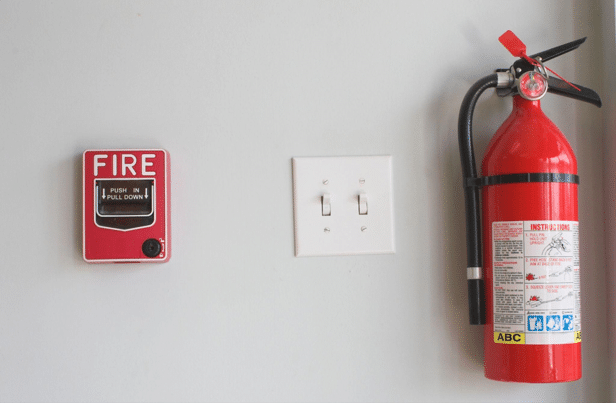
Fire alarms are more effective if you know how to use them and what to do when they go off. First, make sure you know your building’s evacuation plan and where the designated assembly point is outside. When an alarm sounds, get out and stay out until the fire department clears the building. It’s also a good idea to figure out where the manual pull stations are on your floor so you’re not looking for one in a panic. They’re typically near stairwells and exits.
One thing tenants should never do is disable or cover a smoke detector. Not only does it eliminate a layer of protection that exists specifically for you, it’s illegal in most jurisdictions. Tenants should also never ignore a chirping smoke detector hoping it goes away. If something’s malfunctioning in a rental unit, report it to the property owner or manager immediately.
Fire extinguishers
Fire extinguishers can make the difference between a minor nuisance and a full-fledged emergency. Tenants should be able to locate the nearest extinguisher on their floor so they know where to go when they need it. A few extinguisher tips include:
- Extinguishers are only appropriate for small, contained fires. If the fire is spreading or you have any doubt, evacuate.
- If you do use one, remember PASS: Pull the pin, Aim at the base of the fire, Squeeze the handle, Sweep side to side.
- If you’re a resident and you have a fire in your kitchen, don’t use water or a Class ABC extinguisher to put it out. If it’s contained in a pan, smother it with the lid or baking soda; if it’s larger than the pan, evacuate and call 911.
Sprinkler systems
For tenants, sprinklers are mostly hands-off. The most important thing for tenants to remember is that the glass bulb inside each sprinkler head is small and sensitive enough to shatter under pressure. Don’t hang anything on the heads. Ever. Not only can an accidental discharge cause water damage, it also puts the system out of service until a technician can replace the head.
Know your systems, know your role
Being knowledgeable and prepared makes a real difference when an emergency happens. For building owners, that means staying current on inspection schedules, taking system alarms seriously, and working with a qualified fire protection partner to maintain compliance. For tenants, it means knowing your building’s evacuation plan, locating your nearest extinguisher, and understanding how to use the safety systems around you.
Summit Fire Protection works with commercial and residential building owners throughout the Midwest to keep their fire protection systems compliant and performing. With dozens of local teams and expertise across sprinkler, alarm, and suppression systems, we’re the single-partner solution for all your fire and life safety needs.