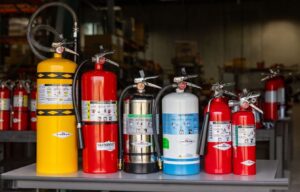
Freezing temperatures can wreak havoc on your fire suppression system, but did you know that they can also impact the working condition of your fire extinguisher and potentially render it unusable?
The good news is not all fire extinguishers are created equal, and there are steps you can take to protect your fire safety equipment.
Some, but not all, fire extinguishers are impacted by ambient temperatures below 40 degrees Fahrenheit. Most fire extinguishers will not be affected.
Water, water mist, film-forming (AFFF and FFFP), and Class K extinguishers are not suitable for freezing temperatures and should be stored indoors or in well-insulated areas. When these canisters freeze, the extinguisher will be unusable, and the interior lining may become damaged.
Carbon dioxide, halogenated agents, dry chemical, and dry powder extinguishers are rated for much lower temperatures and will continue to operate in freezing conditions.
In general, it’s important to understand the different types of fire extinguishers along with their purposes, ratings, and limitations. Below is a brief guide to explain some of these differences and how they relate to the different classes of fire.
Fire classifications
- Class A: Ordinary combustibles
- Class B: Flammable liquids and gases
- Class C: Electrical fires
- Class D: Combustible metals
- Class K: Cooking and grease fires
Water and water mist extinguishers
- Intended primarily for use on Class A fires
- Not suitable for freezing conditions
- However, some of these extinguishers may contain antifreeze, which does allow for use in colder temperatures
Film-forming
- AFFF and FFFP are both rated for use on Class A and B fires
- Not suitable for freezing conditions
Wet Chemical
- For use with Class K fires
- Not suitable for freezing conditions
Carbon Dioxide
- For use on Class B and C fires
- Suitable for freezing conditions
Halogenated
- Halon
- This type of extinguisher is being phased out due to its harmful effects on the ozone
- Halon Alternative Clean Agents
- For use on Class A, B, and C fires
- Suitable for freezing conditions
Dry Chemical
- Ordinary
- For use on Class B and C only
- Suitable for freezing conditions
- Multipurpose
- Can be used on Class A, B, and C fires
- Suitable for freezing conditions
- This is the most widely used fire extinguisher
Dry powder
- For use on Class D fires and specific metals
- Suitable for freezing conditions
Remember, always keep your fire extinguisher protected from the outdoor elements. Aside from freezing temperatures, precipitation and humidity may cause your canister to corrode or rust and cause damage that will impede its functionality. Fire extinguisher cabinets help keep your equipment free of moisture and damage, but even those won’t save you from freezing temperatures. Move your cold-weather sensitive extinguishers to an indoor location or a well-insulated area to keep them protected and functioning properly.
If you have questions on which types of extinguishers are right for you or where best to store them, contact a Summit Fire Protection professional for additional guidance.